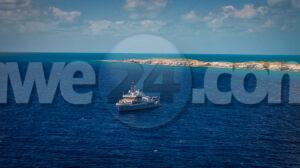
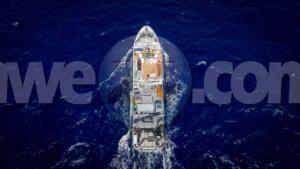
Pa un isla rondona y forma pa lama, pa compronde Aruba su identidad y herencia, nos tambe mester compronde kiko tin bou di awa. Awo a surgi un oportunidad importante. Investigadornancomo hende local por mira bou awa na un escala cu antes no tabata posibel. E parti central di e expedicion di Herencia Cultural Bou Awa ta RV Hydra, un boto di investigacion di 56meter opera pa Inkfish, un organisacion filantropico cu ta dedicana expande conocemento cientifico di lama y ta beneficia publico cu su investigacionnan. E expedicion aki ta totalmente subsidia pa Inkfish, creando un oportunidad significativo paAruba por haya acceso na infrastructura specialisa painvestigacion, tecnologia y expertisio.
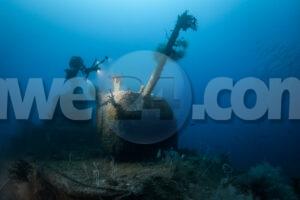
E trabou ta sigui e pricipionan di e Convenio di UNESCO 2001pa Proteccion di Herencia Cultural Bou Awa, cual ta encurashapaisnan pa proteha su herencia bou awa, pa evita di saca obhetonan inecesariamente y pa traha hunto den investigacionnan, capacitacionnan y intercambia conocemento.Pa mas cu dos decada ta desaroyando investigacionnan den Aruba su Herencia Cultural Bou Awa. Na 1999 arkeologoRaymundo Dijkhoff di Museo Arqueologico Nacional Aruba(MANA) a cuminsa traha rednan cientifico, colecta informaciony explora acercamentonan pa proteha sitionan bou awa.
Na 2011, un inventario inicial di Aruba su herencia cultural bou awa a cuminsa, sigui pa mas investigacionnan, actividadnan pacrea concientisacion y colaboracion internacional. Na 2019, a entrega un peticion formal di Aruba, Corsou y St. Maarten naHulanda pa ratifica e Convenio di UNESCO 2001. E ratificacionta planea pa tuma luga den e proximo añanan. Pesey, e proyectocu Inkfish ta representa e siguiente paso den investigacion di Herencia Cultural Bou Awa pa Aruba despues di un trayectoriodi 20 aña.
E strea di e expedicion aki ta un ‘multi–beam sonar’ cu por trahamapa di e fondo di lama te cu 2500 meters profundo, door di manda ‘soundwaves’ pa e fondo y door di uza e signal cu ta binbek pa crea mapanan tres-dimencional. E meta ta pa traha mapa di mas cu ta posibel y mehora e conocemente di tanto sitionanconoci y no conoci di herencia cultural bou awa rond di Aruba.RV Hydra tambe ta carga dos submarino chikito pa investigacioncu ta capabel di opera te cu 1,000 meter. E boto di apoyo, Skye, lo yuda traha mapa di fondo di lama y sostene operacionnan di sambuyamento, mientras cu Hydra mes ta contene dos laboratorio pa procesa muestranan y informacion cientificodurante e expedicion.
E investigacion no ta limita pa arkeologia. Cientificonan tambe lo investiga Aruba su medio ambiente marino. Un tecnica cu lo uza ta di ‘enviromental DNA’, of eDNA, cual ta detectarastronan di material genetico cu organismonan ta laga atras den awa di lama, manera celula di cuero of fragmentonan di foyo. Esaki ta yuda pa haya un bista mas amplio di e cantidad di especienan presente sin cu tin mester pa captura nan. Ecombinacion di traha mapa arkeologico y investigacionecologico ta provee un oportunidad unico pa Aruba comprondesu herencia natural y cultural bou awa.
Den e mision aki, profesionalnan Arubiano lo traha directamentecu e team di Inkfish durante e expedicion. Arkeologo di MANA Harold Kelly y ecologo Oriana Wouters di Imagination forDevelopment and the Nature of Values Aruba (IDNOVA) loparticipa riba RV Hydra, hayando experiencia practico cumetodo y tecnologianan mientras contribuyendo conocementolocal di Aruba y su lama.
Managing Underwater Cultural Heritage through knowledge
For an island surrounded and shaped by the sea, to understand Aruba’s identity and heritage we also need to understand what lies beneath the water. An important opportunity has arisen.Researchers as well as locals can now look at Aruba’s underwater landscape on a scale that previously was not possible. At the center of the upcoming Underwater Cultural Heritage expedition is RV Hydra, a 56-metre research vessel operated by Inkfish LLC; a philanthropic research organization that dedicates to expanding scientific knowledge of the sea and benefiting the public through this research. This expedition is fully funded by Inkfish, creating a significant opportunity for Aruba to access specialized research infrastructure, technologyand expertise.
The work follows the principles of the UNESCO 2001 Convention on the Protection of the Underwater Cultural Heritage, which encourages countries to protect underwater heritage, avoid unnecessary removal of objects and work together through research, training and knowledge exchange.Research into Aruba’s Underwater Cultural Heritage (UCH) has been developing for more than two decades. In 1999 archaeologist Raymundo Dijkhoff of the Museo ArqueologicoNacional Aruba (MANA) started building scientific networks, collecting information and exploring approaches to protectunderwater sites.
In 2011, an initial inventory of Aruba’s underwater cultural heritage began, followed by further research, awareness activities and international collaboration. In 2019, a formal petition by Aruba, Curacao and St. Maarten to the Netherlands to ratify the UNESCO 2001 convention was approved. Ratification is planned in the coming years. Therefore, the project with Inkfish represents the next step in UCH research for Aruba after a 20-year trajectory.
The star in this expedition is a multi–beam sonar that can map the seabed down to 2500 meters, by sending soundwaves toward the bottom and using the returning signal to create three dimensional maps of the seafloor. The aim is to map as much as possible and improve understanding of both known and potentially unknown underwater cultural heritage sites around Aruba. RV Hydra also carries two research submersibles capable of operating to depths of 1,000 meters. The specialized ship’s support vessel, Skye, will support seabed mapping and diving operations, while Hydra itself contains two laboratories to process samples and scientific information during the expedition.
The research is not limited to archaeology. Scientists will also investigate Aruba’s marine environment. One technique being used is environmental DNA, or eDNA, which detects traces of genetic material that organisms leave behind in seawater, like skin cells or leaf fragments. This helps build a wider picture of the number of species present without needing to capture them. This combination of archaeological mapping and ecological research provides a unique opportunity for Aruba to understand its underwater natural and cultural heritage.
In this endeavor, Aruban professionals will work directly alongside the Inkfish team during the expedition. MANA archaeologist Harold Kelly and ecologist Oriana Wouters of Imagination for Development and the Nature of Values Aruba (IDNOVA) will participate aboard RV Hydra, gaining hands-on experience with new research methods and technologies while also contributing local knowledge about Aruba and its waters.